2026-08-29 ·
Gas Water Heater Repair in Buckeye: Common Issues in Desert Climates
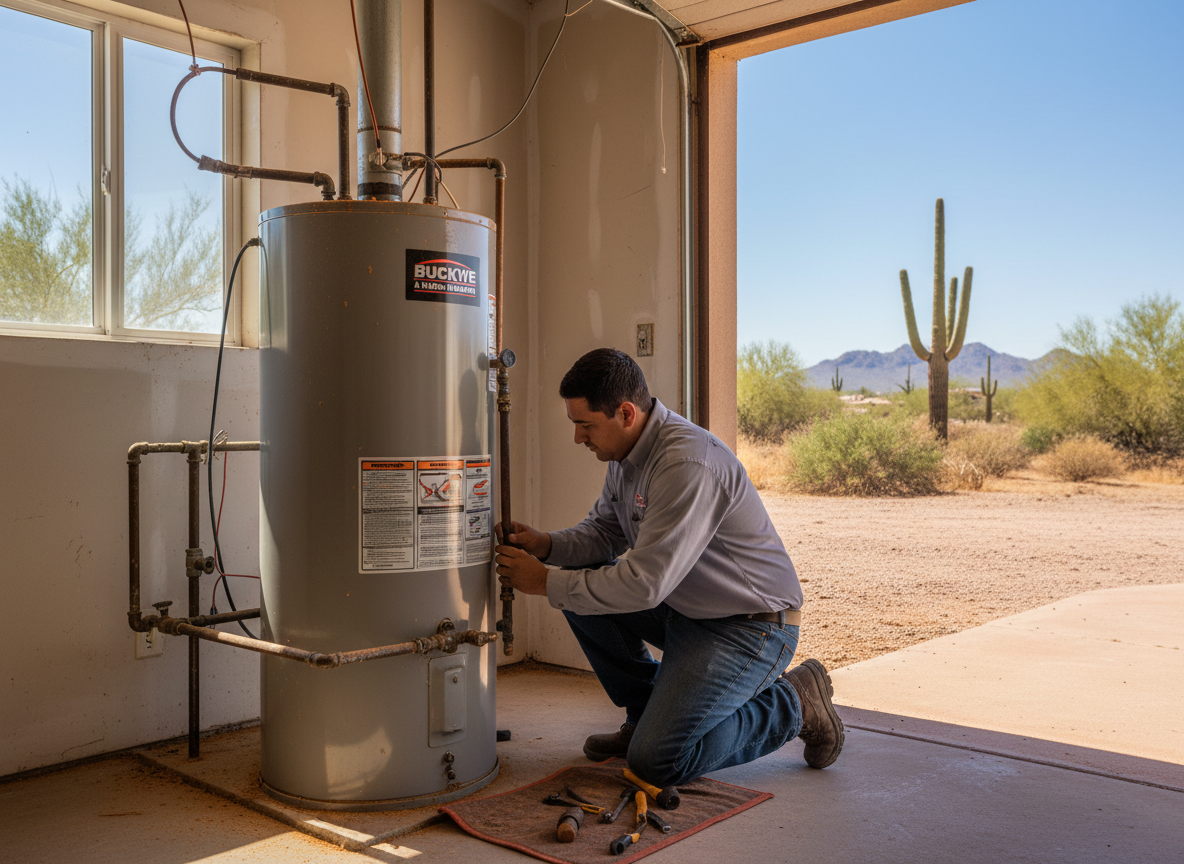
Gas water heater repair in Buckeye centers on sediment accumulation and accelerated corrosion driven by the region's hot desert climate. Summers routinely push temperatures above 110°F, forcing units to cycle harder while mineral-rich groundwater deposits scale faster than in milder regions. Homeowners in Verrado, Sundance, and Westpark report thermostat failures and reduced efficiency within 6–8 years on 40- and 50-gallon models. These patterns differ from nearby Goodyear and Avondale due to Buckeye's slightly higher mineral content in local wells.
Sediment Buildup and Scale in Desert Water
Buckeye groundwater carries elevated calcium and magnesium that settle rapidly when water heaters maintain 120–140°F. In summer, constant high ambient heat keeps tank temperatures elevated longer, baking sediment into a hard layer on the bottom. This layer insulates the burner, raising fuel use and stressing the glass lining. Technicians serving Westpark often remove 2–4 inches of compacted scale during drain-and-flush calls. Annual flushing with a 5-gallon bucket and garden hose removes most loose material before it hardens. Homes near White Tank Mountain Regional Park see marginally harder water than those closer to Buckeye Lake, requiring more frequent attention. Neglected tanks develop hot spots that warp the burner tray and trip the high-limit switch.
Corrosion and Anode Rod Degradation
Mild winters still produce daily temperature swings of 30–40°F that stress tank metal through expansion and contraction. Combined with mineral-heavy water, this shortens anode rod life to 3–5 years instead of the 6–8 years common in coastal climates. Once the magnesium or aluminum rod depletes, the tank wall begins to pit, especially near the cold-water inlet. In Sundance neighborhoods, plumbers frequently replace rods on 8-year-old units before leaks appear. Checking rod condition during every service visit prevents sudden failures. Replacement rods cost $25–$45 and take under 30 minutes to swap on standard atmospheric models.
Pilot Light and Thermocouple Issues from Heat Stress
High outdoor temperatures around Verrado Town Center raise attic and garage ambient readings above 130°F, cooking pilot assemblies and warping thermocouples. Dust from desert winds further clogs orifices, causing weak flames that fail to hold the safety valve open. Homeowners notice the unit shutting down midday when demand peaks. Cleaning the pilot orifice with compressed air and replacing the thermocouple restores reliable ignition. In Maricopa County, these heat-related failures peak between June and September, prompting many residents to schedule pre-summer inspections.
When to Schedule Gas Water Heater Repair
Persistent lukewarm water, rumbling during recovery, or visible rust at the drain valve signal the need for prompt attention. Buckeye residents can reach Buckeye Water Heater Repair for 24/7 emergency service any day of the week. For homeowners weighing long-term options, the related article Heat Pump Water Heater Repair: Is It Right for Buckeye Homes? outlines efficiency trade-offs. Routine water heater inspection catches issues early, while gas water heater repair addresses immediate failures without full replacement.